It's already working elsewhere
Great transit isn't a fantasy. Cities and countries around the world have built it, often after making the same car-first mistakes we did. Here's what BC can learn from them.
Melbourne: the tram city
While most cities tore out their streetcars, Melbourne kept and grew its network. Today it runs the world's largest urban tram system, with about 250 km of double track, roughly 1,700 stops and 24 routes, plus a free tram zone in the city centre.
The lesson: Vancouver had streetcars too. Keeping and expanding what you have pays off for generations.
The catch: Most of Melbourne's track runs in mixed traffic, which makes it one of the slowest tram networks in the world.
The country that chose bikes
In the early 1970s, Dutch roads were dangerous too, and thousands of people were dying in traffic every year, including many children. Parents and activists launched a movement called Stop de Kindermoord ("Stop the Child Murder"), blocking streets and protesting until the government redesigned its roads. Today the Netherlands has tens of thousands of kilometres of dedicated bike paths.
The lesson: Their bike paradise wasn't natural. Citizens demanded it.
Helsinki: safe streets by design
Helsinki combines a metro, trams, commuter trains and a huge network of bike paths. It lowered speed limits on most city streets to 30 km/h and redesigned roads to keep traffic slow. In 2019, not a single pedestrian was killed in Helsinki traffic, a first since records began in 1960.
The lesson: Good design and good transit save lives.
The original bullet train
Japan opened the first Shinkansen line between Tokyo and Osaka in 1964. It became famous for speed, punctuality and an outstanding safety record, and its network now links cities across the country.
The lesson: Fast, reliable intercity rail can beat both driving and flying.
Building at record speed
China's high-speed rail network passed 50,000 km in late 2025, more than the rest of the world's high-speed lines combined, and now reaches 97% of its cities with more than 500,000 people. Most of it was built in under two decades.
The lesson: With the political will, rail can be built fast. Canada has almost no high-speed rail at all.
Transit that reaches every village
Switzerland is known for trains timed to connect with each other at major stations, and for its PostBus network, which carries passengers to small towns and mountain villages across the country.
The lesson: Rural transit works when buses are timed to meet the trains. That's exactly what places like Stave Falls and Dewdney need.
Our commuter rail vs. theirs
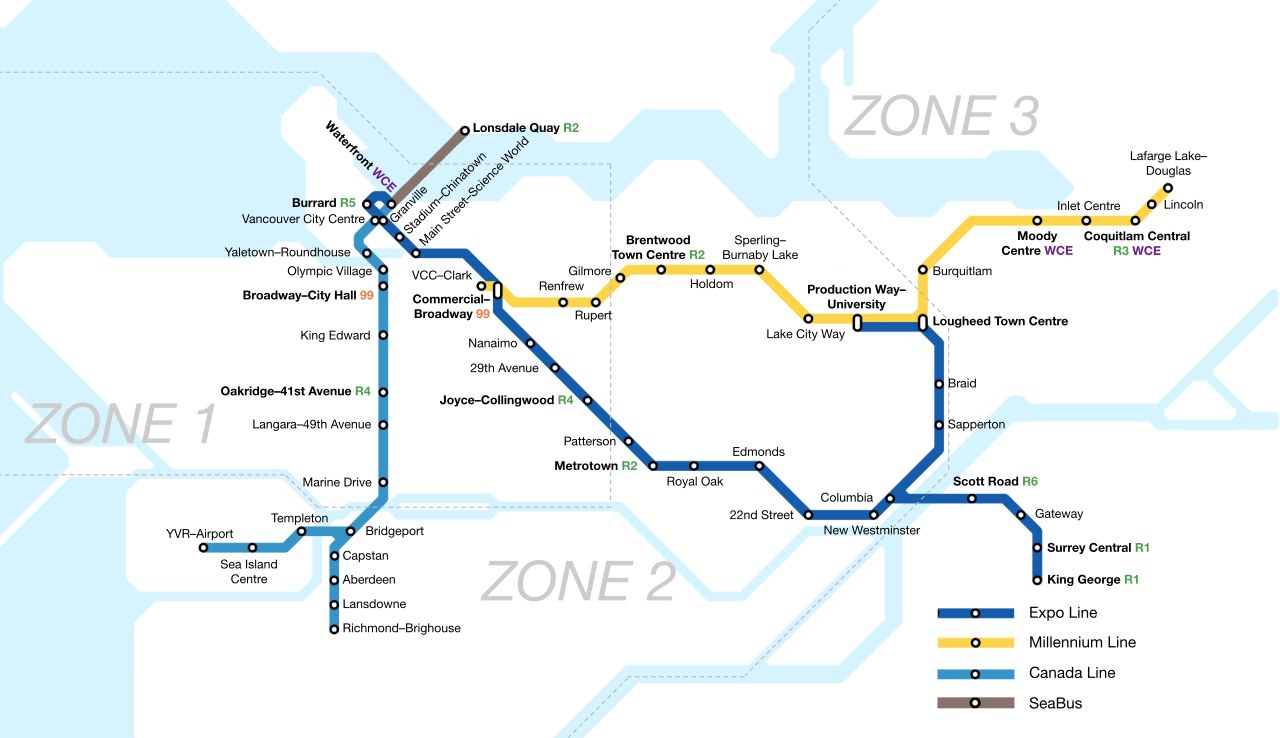
Credit where it's due: SkyTrain is good. It's driverless, frequent and runs 79.6 km with 54 stations. Where we fall far behind is regional rail, the trains that connect suburbs and valley towns to the city. Here's the West Coast Express next to commuter rail networks around the world.
Stations served
Riders on a typical weekday
When the trains run
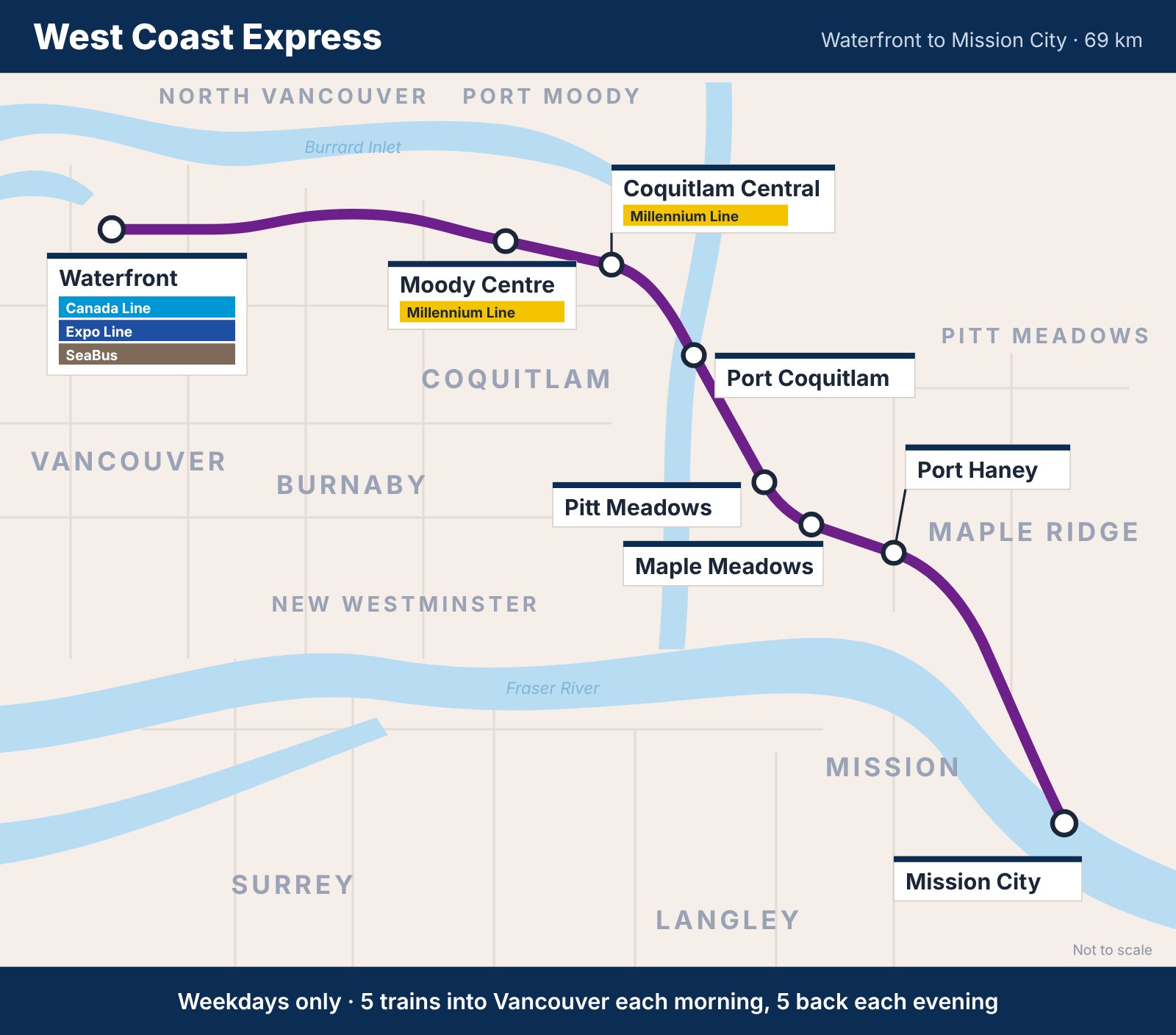
West Coast Express: 5 trains into Vancouver on weekday mornings, 5 back out in the evening. Nothing midday, nothing on weekends.
Munich: a train every 20 minutes as the basic service, all day.
Copenhagen: every station served at least every 10 minutes on weekdays until the evening.
Toronto shows it can happen here
GO Transit started in 1967 as a single line along Lake Ontario. Today it runs 7 lines and 71 stations, with all-day service on its busiest lines. A big reason: Metrolinx now owns about 80% of the track its trains run on, much of it bought from the freight railways. That's the model for the Fraser Valley.
Seattle is stuck like us
Seattle's Sounder looks a lot like the West Coast Express: mostly rush-hour trains on tracks owned by a freight railway, BNSF, which has to approve any new trips. Same problem, same fix needed.
Built on what already existed
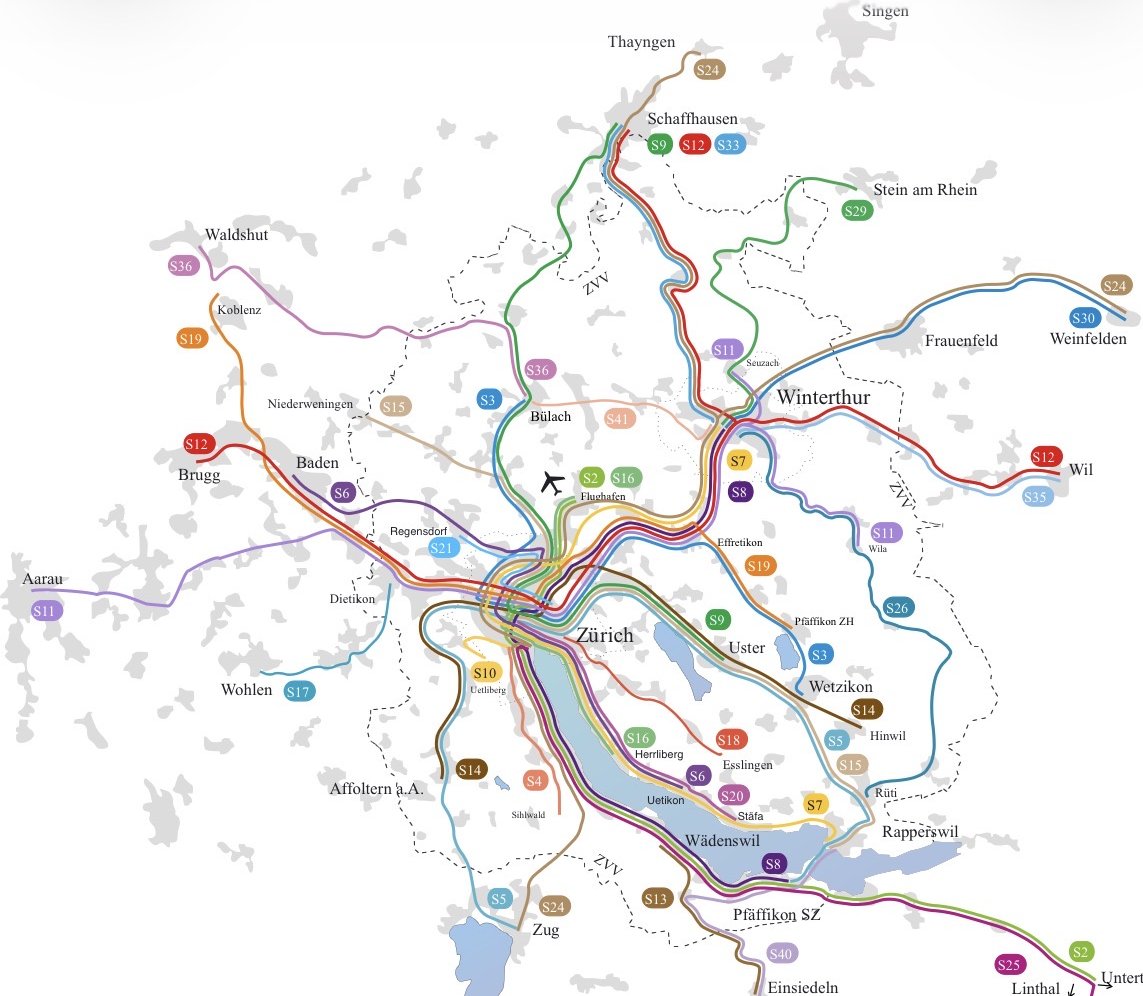
Munich, Zurich, Copenhagen and Stockholm built regional rail mostly on lines that were already there, then ran trains often enough that people could rely on them. That's exactly what we're asking for.
Figures from TransLink, Metrolinx, Sound Transit, MVV, ZVV and other operators, 2023–2025. Station counts, lengths and ridership are approximate.
Our map vs. theirs
Metro Vancouver is a region of over three million people. To keep it fair, we compare like with like: our regional train against a regional train, and our city rail against city rail.
Regional rail: West Coast Express vs. Zurich S-Bahn
Full-size trains on mainline track, linking the city to the suburbs and towns around it.
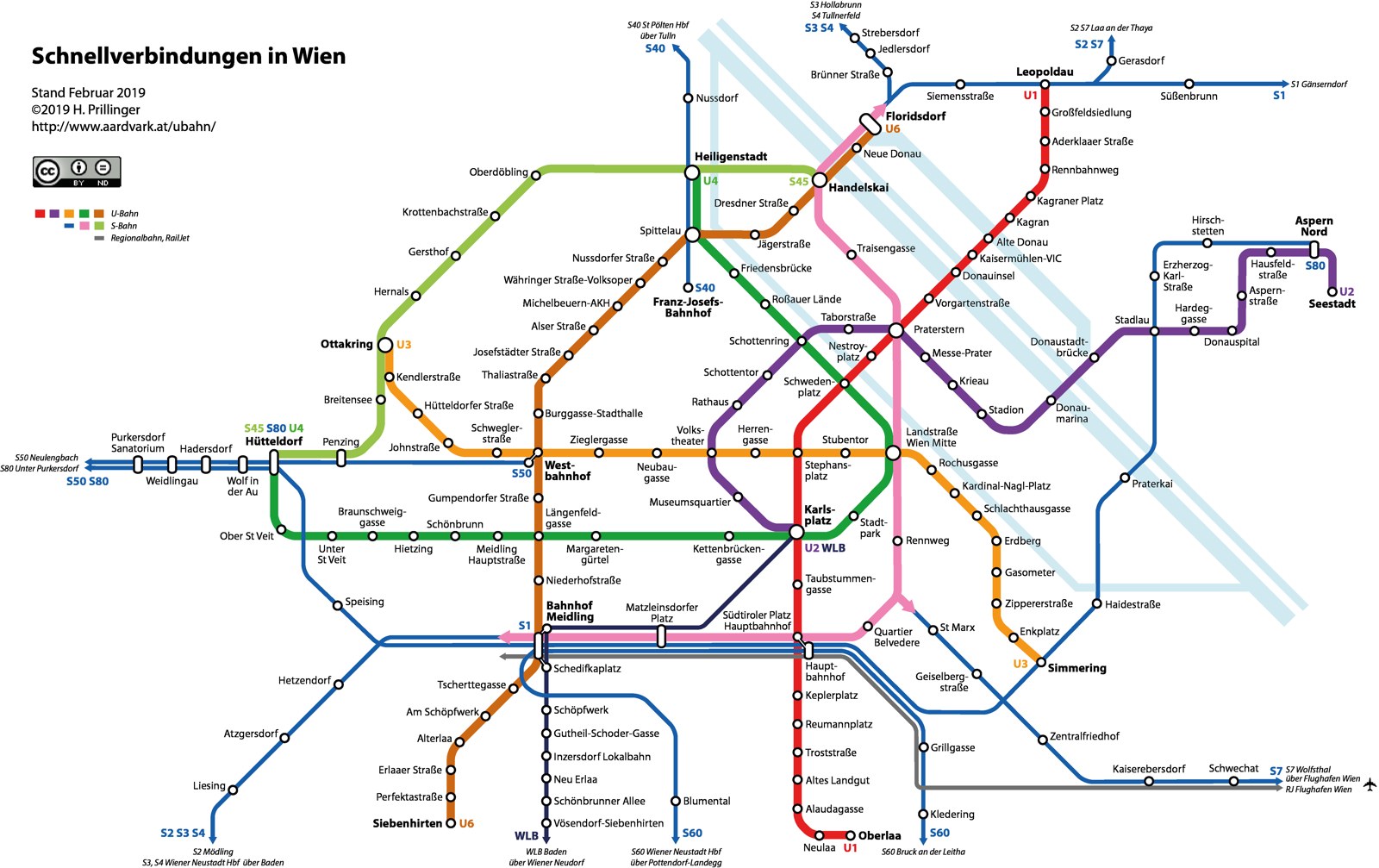
City rail: SkyTrain vs. Vienna U-Bahn
Fast, frequent trains on their own tracks, moving people around the city itself. SkyTrain is a light metro, the same job Vienna's U-Bahn does.
And that's the best BC has. The Okanagan has no passenger rail at all, and Vancouver Island's E&N line hasn't carried a passenger train since 2011.
But more trains are only half the story. How a city runs them matters just as much.
Transit needs priority
No system on this page is perfect, and their problems teach us as much as their successes. The biggest lesson: transit stuck in the same traffic as cars loses most of its advantage.
The problem: Toronto and Melbourne
Both cities kept their streetcars, but most of their track shares lanes with cars. Streetcars get stuck behind traffic, turning vehicles and double-parked trucks, so trips are slow and unreliable. A streetcar in mixed traffic is basically a bus that can't steer around anything.
The fix: King Street, Toronto
In 2017, Toronto piloted giving streetcars priority on King Street, its busiest streetcar route, by stopping cars from driving straight through downtown. Trips became faster and more reliable, more people rode, and the city made it permanent in 2019.
The lesson for BC: whatever we build, whether streetcars, buses or trains, has to get priority. Dedicated lanes, signals that turn green for transit, and passenger trains that don't wait behind freight. That's the same fight we're having with CPKC.
Build streets that slow cars down
Speed limits and tickets only go so far. People drive the speed a road feels safe for, no matter what the sign says. Many countries get safer streets by designing roads that naturally keep drivers slow.
United Kingdom
Narrow, winding streets, roundabouts, chicanes and raised crossings make drivers slow down on their own. Many UK towns use 20 mph (about 30 km/h) zones, and Wales made 20 mph the default on most residential streets in 2023.
Netherlands
The Dutch woonerf, or "living street," mixes people, bikes and cars in one space, with trees, benches and bends that force cars to crawl. The street feels like a shared yard, not a highway.
Finland
Helsinki narrowed roads and planted trees along them on purpose, to make drivers move more cautiously, and paired that with lower speed limits.
The lesson for BC: instead of relying on police to catch speeders, design streets where speeding doesn't feel natural in the first place. It's cheaper, safer, and it works around the clock.
Same job, two very different streets
Both of these streets exist to get people where they need to go. Only one of them was built for the people.
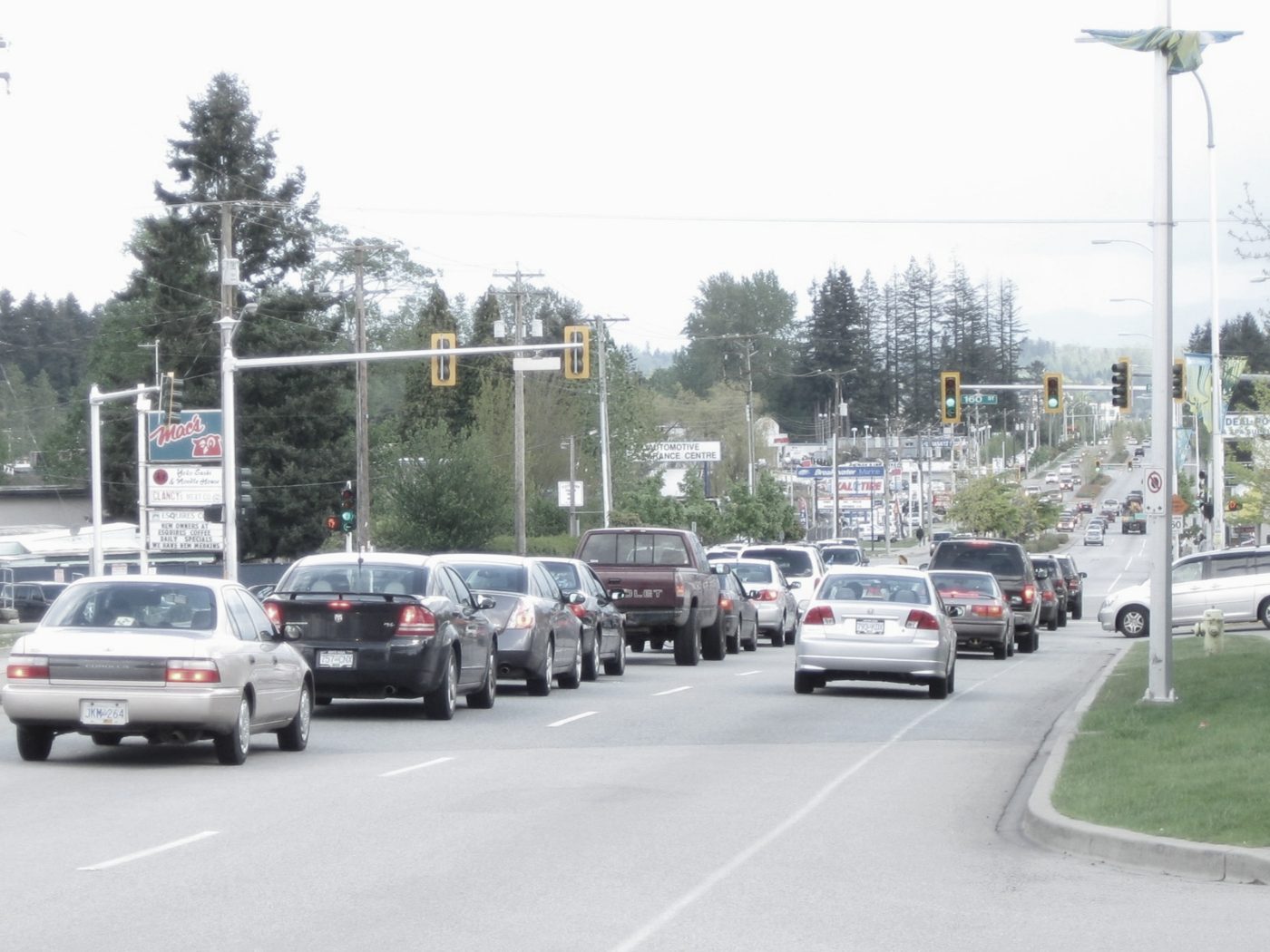
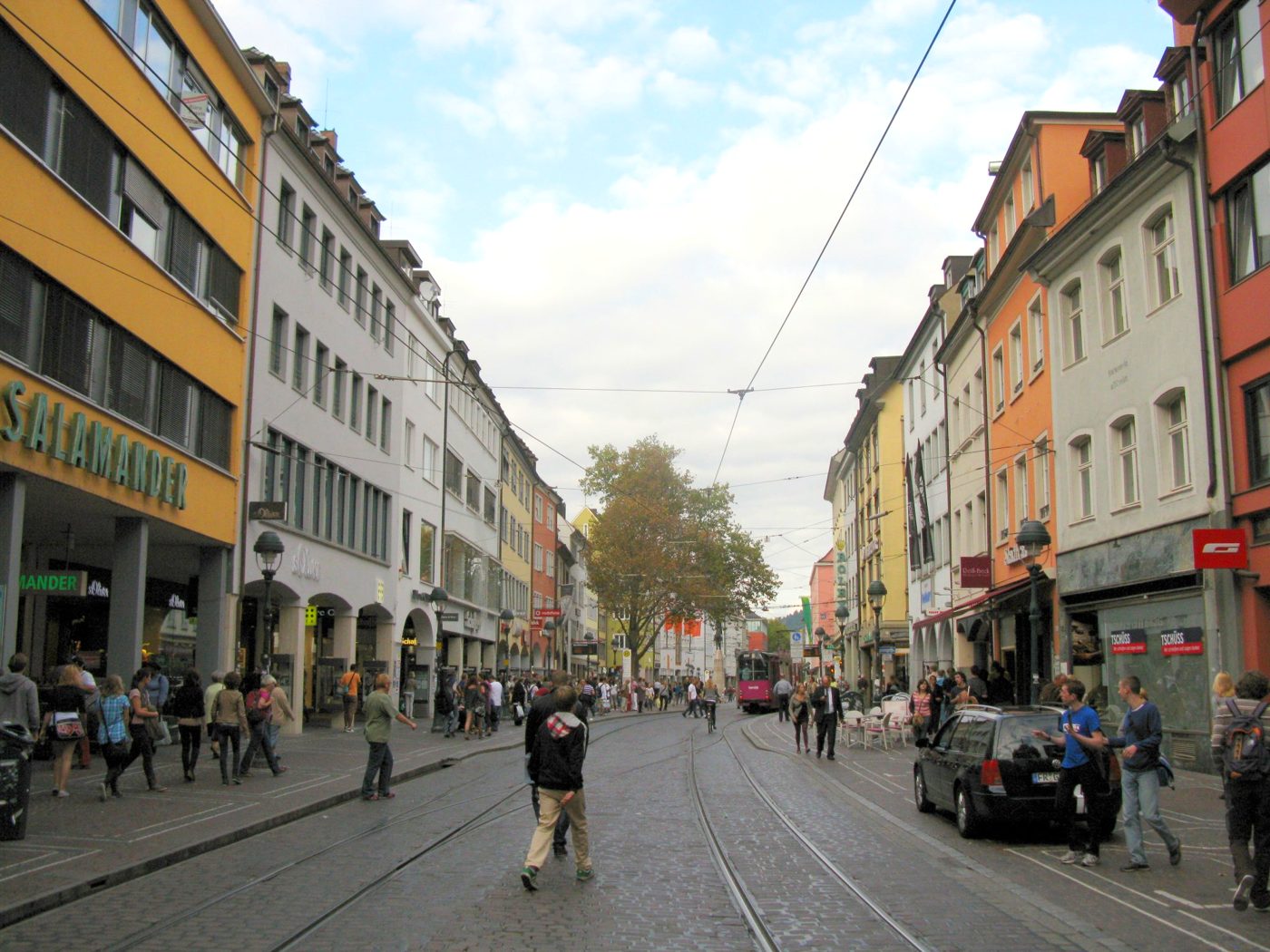
Look again. The Surrey street looks busier, but almost 9 in 10 people who drive to work in Metro Vancouver are alone in their car. All those cars might be carrying barely more people than there are cars. The Freiburg street looks calmer, yet it holds far more people, and that's before you count whoever is on the tram.
Source: Statistics Canada, commuting survey, May 2024 (87.6% of Vancouver-area car commuters drove alone).
BC can do this too
None of these places started out with great transit. They chose it, often because ordinary people pushed for it. Add your name and help us push here.
Sign the petition